LISINER Delivers 162 MWh of C&I Energy Storage for a Fortune Global 500 Petrochemical Group
Following its cooperation on a key Belt and Road project in Brunei, LISINER has achieved another major milestone in its partnership with a Fortune Global 500 leading petrochemical enterprise. Recently, working with two of its subsidiaries, LISINER delivered the 40 MW/80 MWh C&I energy storage facility in Jiaxing and the 41 MW/82 MWh C&I energy storage facility in Hangzhou, implementing digital energy practices across diverse business scenarios.
From single-site breakthroughs to multi-region deployment, both sides have entered a new phase in jointly advancing energy transition and pursuing green development.
As a global benchmark in the petrochemical industry, the client group remains committed to advancing the Dual Carbon Goals. In recent years, it has continuously scaled up the application of green technologies including new energy and resource recycling, and accelerated the construction of an intelligent low-carbon production system. The large-scale deployment of energy storage power stations in partnership with LISINER serves as a key initiative to enhance energy resilience.
Application-Specific Solutions for Distinct Industrial Loads
The petrochemical and chemical fiber industrial chains feature continuous production, complex processes and diverse load characteristics, imposing higher requirements on energy storage systems in terms of response speed, power quality and reliability. Based on the process logic and energy consumption characteristics of different production sites, LISINER demonstrates profound industry insights and capabilities in delivering customized solutions.
Jiaxing | Supporting the development of a microgrid system
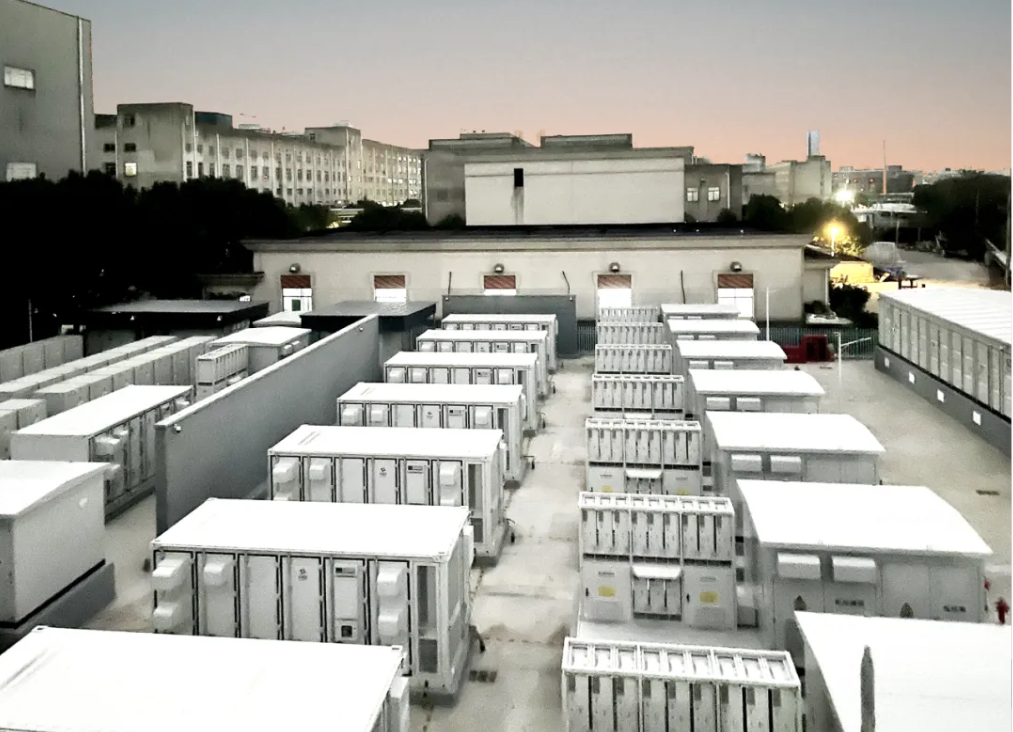
A 12.8 MWp distributed PV system has been deployed at the Jiaxing plant. Based on the coordination between PV output characteristics and production loads, LISINER rolled out the 40 MW/80 MWh energy storage system to strongly underpin the enterprise’s energy strategy upgrade and the construction of the plant’s intelligent microgrid.
The project deploys 36 distributed energy storage cabinets and 13 containerized energy storage systems in a modular hybrid configuration. The containerized systems provide bulk energy support, while the distributed cabinets enable precise, localized regulation of distributed loads. Together, they facilitate coordinated operation across different types of energy storage equipment while balancing space efficiency, dispatch flexibility, and project economics.
Calculations show that the power station is expected to discharge over 45 million kWh within the first year and generate revenue exceeding RMB 36 million. The peak-valley load difference of the industrial park is effectively optimized, bringing simultaneous improvements to energy stability and economic performance in production.
Hangzhou | Critical Load Support
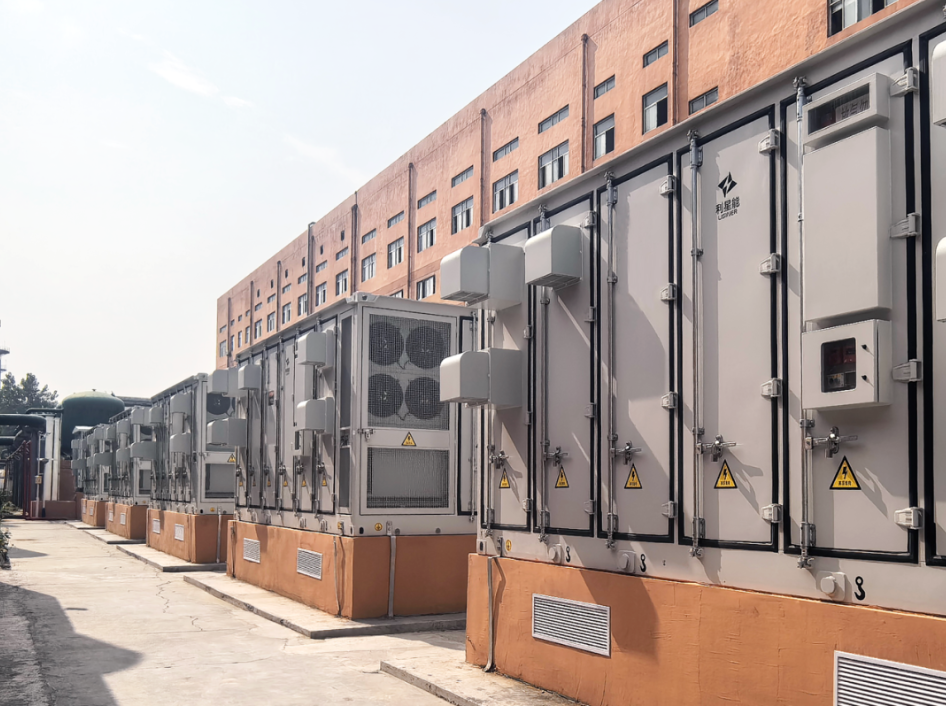
The Hangzhou plant mainly produces differentiated and functional filament yarn as well as polyester chips, which impose extremely stringent requirements on power quality. The newly completed 41 MW/82 MWh C&I energy storage facility focuses on regulating and supporting critical loads. Capable of rapid response and high-quality power output, the system effectively smooths power fluctuations and delivers reliable power supply. By virtue of time-of-use optimization and other grid services, the power station further generates additional benefits, aligning cost optimization with efficient production. It is projected to achieve revenue exceeding RMB 37 million in the first year of operation.
Green commitments are becoming the fundamental logic driving industrial development. The large-scale rollout of these two 80 MWh-class projects sets new practical examples for the green upgrading of the petrochemical and chemical fiber industries. On the path of supporting high-energy-consuming industries in pursuing green transition, LISINER has become the preferred partner for a growing number of leading enterprises. With safer, smarter energy solutions featuring greater operational value, LISINER fuels the next phase of upgrading for the manufacturing sector.